
 DEMOGOD
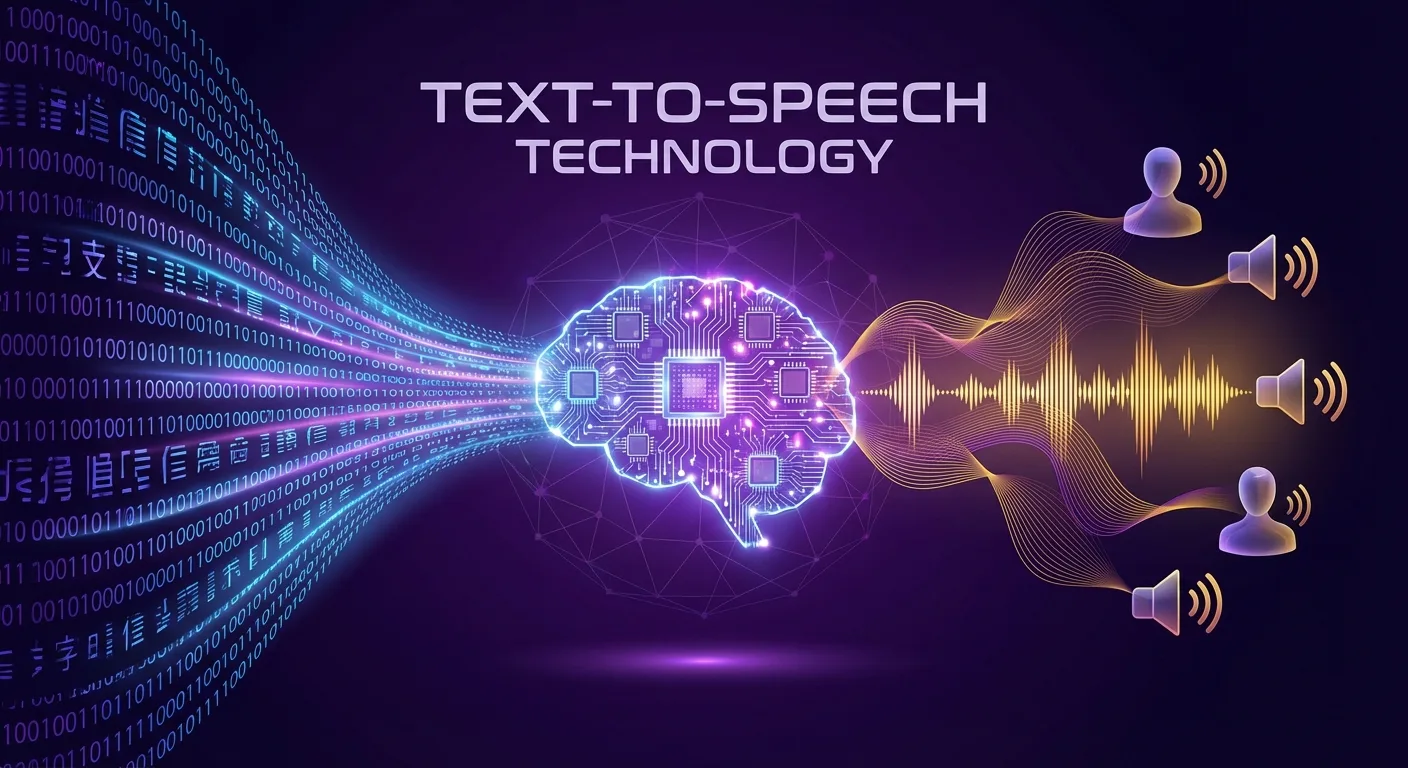
The robotic, stilted voices of early text-to-speech systems are becoming a distant memory. Today is neural TTS can produce speech so natural that listeners struggle to distinguish it from human voices. This transformation is not merely a technical curiosity—it is enabling an entirely new generation of voice AI applications, from virtual assistants to AI-powered product demos that sound genuinely conversational.
The Evolution of Synthetic Speech
Concatenative Synthesis (1980s-2000s)
Early TTS systems worked by stitching together pre-recorded audio fragments. A human voice actor would record thousands of phonemes, words, and phrases. The system would then concatenate these recordings to form sentences.
The results were functional but obviously artificial:
- Unnatural transitions between audio segments
- Monotonous prosody (rhythm and intonation)
- Limited expressiveness
- Massive storage requirements for voice databases
Think of the voice announcing subway stations or automated phone systems from the 2000s. Understandable, but unmistakably robotic.
Parametric Synthesis (2000s-2010s)
Parametric systems generated speech mathematically rather than splicing recordings. They used acoustic models to predict speech parameters from text, then synthesized audio from these parameters.
This approach offered more flexibility—voices could be modified without re-recording—but quality remained limited. The "buzzy" or "muffled" quality of parametric speech kept it firmly in uncanny valley territory.
Neural TTS (2016-Present)
The breakthrough came with deep learning. Neural TTS systems use massive neural networks trained on thousands of hours of human speech to generate audio that captures the subtle patterns of natural conversation.
Key milestones:
- WaveNet (2016): DeepMind is autoregressive model produced unprecedented quality but was computationally expensive
- Tacotron (2017): End-to-end neural TTS that simplified the pipeline
- FastSpeech (2019): Parallel generation enabled real-time synthesis
- VITS, Bark, Tortoise (2022+): Modern systems approaching human parity
How Modern Neural TTS Works
Contemporary TTS systems typically involve multiple stages:
Text Analysis
Before generating audio, the system must understand the text:
- Normalization: Converting "$5" to "five dollars" or "Dr." to "Doctor"
- Phoneme conversion: Transforming words into pronunciation symbols
- Prosody prediction: Determining emphasis, pauses, and intonation
This stage is crucial. Mispronouncing a word or stressing the wrong syllable immediately reveals synthetic origins.
Acoustic Modeling
The acoustic model converts linguistic features into audio characteristics:
- Mel spectrograms: Visual representations of audio frequency over time
- Duration prediction: How long each phoneme should last
- Pitch modeling: The fundamental frequency of speech
Neural networks learn these mappings from training data, capturing patterns too subtle for explicit programming.
Vocoder
The vocoder converts acoustic features into actual audio waveforms. Modern neural vocoders like HiFi-GAN produce high-fidelity audio in real-time, the final step in creating natural-sounding speech.
What Makes Voice Sound Human
Creating convincing synthetic speech requires capturing aspects of human vocalization that we process unconsciously:
Prosody
Prosody encompasses rhythm, stress, and intonation—the "melody" of speech. Questions rise at the end. Emphasis highlights important words. Emotional state colors the entire utterance.
Early TTS failed here most obviously. Modern systems learn prosodic patterns from data, producing speech that sounds emotionally appropriate.
Breathing and Pauses
Humans breathe. We pause to think. We hesitate. Synthetic speech that flows without natural breaks sounds unsettlingly smooth. Quality TTS now incorporates these human rhythms.
Coarticulation
When we speak, sounds blend together. The "n" in "input" sounds different from the "n" in "answer" because surrounding sounds influence articulation. Neural models capture these subtle interactions.
Micro-variations
Human speech is never perfectly consistent. Pitch wavers slightly. Timing varies. These micro-variations are part of what makes speech sound alive rather than mechanical.
Leading TTS Providers
Several providers offer high-quality neural TTS for production applications:
ElevenLabs
Known for exceptional quality and emotional range. Supports voice cloning from short samples and offers fine-grained control over delivery style. Popular for content creation and voice AI applications.
Amazon Polly
AWS is offering with Neural TTS voices. Reliable, scalable, and well-integrated with AWS ecosystem. Good for applications requiring high availability.
Google Cloud TTS
Offers WaveNet and Neural2 voices with strong multilingual support. Integrates seamlessly with other Google Cloud services.
Microsoft Azure TTS
Comprehensive offering with neural voices and custom voice creation. Strong enterprise features and compliance certifications.
Cartesia
Focused on ultra-low latency for real-time applications. Particularly suited for conversational AI where response time is critical.
PlayHT and Others
A growing ecosystem of specialized providers offers various tradeoffs between quality, latency, cost, and features.
TTS in Voice AI Applications
Text-to-speech is a critical component of any voice AI system. The quality of synthesized speech directly impacts user experience and perception of AI intelligence.
Conversational Agents
Voice assistants and AI agents rely on TTS to communicate. Poor synthesis undermines even brilliant AI reasoning—users judge the system by how it sounds.
At Demogod, we use premium neural TTS to ensure our voice agents sound natural and engaging. When an AI guides users through a product demo, robotic speech would destroy the experience.
Content Creation
Podcasters, video creators, and audiobook producers increasingly use neural TTS for narration. The quality now approaches professional voice actors for many use cases.
Accessibility
Screen readers and accessibility tools benefit enormously from improved TTS. Natural-sounding speech reduces listening fatigue for users who depend on audio interfaces.
Localization
Neural TTS enables cost-effective localization. Rather than recording voice actors in dozens of languages, companies can synthesize speech from translated text.
Voice Cloning and Custom Voices
Modern TTS systems can create custom voices from relatively small samples:
Voice Cloning
Services like ElevenLabs can clone a voice from minutes of audio. This enables:
- Brand-consistent AI voices
- Personalized assistants
- Voice preservation for medical patients
- Deceased voice recreation (with appropriate permissions)
Custom Voice Training
Enterprise deployments often create custom voices from professional recordings. This ensures unique, brand-owned voices that competitors cannot replicate.
Ethical Considerations
Voice cloning raises important ethical questions:
- Consent requirements for voice replication
- Deepfake potential for fraud
- Copyright and ownership of synthetic voices
- Detection and labeling of synthetic speech
Responsible providers implement safeguards, but the technology is evolving faster than regulation.
Latency Considerations
For conversational applications, TTS latency is critical. Users expect responses within hundreds of milliseconds—the natural cadence of conversation.
Streaming Synthesis
Modern TTS systems stream audio as it is generated rather than waiting for complete synthesis. This reduces perceived latency significantly.
Caching and Pre-generation
Common phrases can be pre-generated and cached. Dynamic content is synthesized in real-time while cached audio provides instant responses for predictable utterances.
Edge Deployment
Running TTS models on edge devices eliminates network round-trips. This is increasingly viable as models become more efficient.
The Future of TTS
Text-to-speech technology continues advancing rapidly:
Emotional Expression
Future systems will offer finer control over emotional delivery. Specify not just what to say but how to feel while saying it—excited, sympathetic, confident, cautious.
Contextual Awareness
TTS will increasingly understand context. The same text might be spoken differently depending on conversation history, user preferences, or situational factors.
Multimodal Integration
Voice synthesis will integrate with visual generation. AI avatars will speak with synchronized lip movements, gestures, and facial expressions.
Real-time Voice Conversion
Rather than text-to-speech, future systems may perform voice-to-voice conversion in real-time, translating speech while preserving speaker characteristics.
Choosing TTS for Your Application
Selecting a TTS provider depends on several factors:
- Quality requirements: How natural must the voice sound?
- Latency constraints: Is this conversational or asynchronous?
- Volume and cost: How many characters per month?
- Language support: Which languages and accents needed?
- Custom voice needs: Generic voices or brand-specific?
- Integration complexity: API ease-of-use and documentation
For voice AI applications like Demogod, we prioritize quality and low latency—the voice must sound natural and respond instantly to maintain conversational flow.
Conclusion
Text-to-speech has crossed a threshold. Neural synthesis now produces speech that sounds genuinely human—natural prosody, emotional expression, and subtle variations that were impossible just years ago.
This transformation enables new categories of voice AI applications. Product demos, customer service, education, accessibility—anywhere voice communication adds value, neural TTS makes AI participation viable.
The voices of AI are no longer robotic announcements to be tolerated. They are conversational partners that sound like colleagues. That shift changes everything about how we interact with software.
Experience natural-sounding AI voices in action. Try Demogod and discover how voice AI creates engaging product experiences.